
St. Louis summers are brutal on air conditioners and not just because of the heat. Learn why humidity, heat index, and long cooling seasons push AC systems hard.
Ask any HVAC technician who has worked in multiple cities, and they’ll tell you the same thing: St. Louis is a tough market for air conditioning equipment. Not because the summers are the hottest in the country — plenty of cities are hotter — but because of the specific combination of conditions that define a St. Louis summer. Heat, humidity, long cooling seasons, and temperature swings stress equipment in ways that pure heat alone never does.
It’s Not Just the Heat, But the Humidity Load
St. Louis sits in a humid continental climate. Average July humidity levels regularly hover between 70 and 85 percent. That changes everything about how an air conditioner has to work.
A central AC system does two jobs simultaneously: it removes heat from your home and moisture. When outdoor air is already saturated, your system has to work significantly harder to dehumidify. The evaporator coil — the indoor component responsible for absorbing heat and pulling moisture from the air — runs longer, colder, and under a more sustained load than it would in a drier climate, yet produces the same temperature reading on the thermostat.
The practical result: your system runs longer cycles, your components accumulate more wear per summer, and your energy consumption is higher than the outdoor temperature alone would suggest. A Phoenix homeowner dealing with 100°F dry heat is putting less total strain on their AC than a St. Louis homeowner dealing with 92°F and 78% relative humidity.
What the heat index actually means for your AC: When meteorologists say it “feels like” 105°F, that’s a measure of how your body experiences the combined heat and humidity. Your air conditioner experiences something similar — it has to condition air that contains far more thermal energy than the dry-bulb temperature suggests. Your system’s rated capacity was calculated at standard conditions. High humidity days push equipment beyond those benchmarks.
Long Cooling Seasons Mean More Cumulative Weather
In many parts of the country, air conditioners run hard for two to three months. In St. Louis, the practical cooling season — days where your AC runs regularly — stretches from May through September, and often into October. That’s five months of active operation, plus shoulder-season starts and stops in spring and fall that create their own mechanical stress.
Compressors, capacitors, blower motors, and contactors all have finite operating hours. The more total runtime your system accumulates each year, the faster those components approach the end of their useful life. A St. Louis AC system may log significantly more annual runtime hours than the same model installed in a city with a shorter cooling season — and that difference compounds over the life of the equipment.
This is one of the reasons annual AC maintenance isn’t optional in this market. A spring tune-up before the cooling season starts gives a technician the chance to catch components that are wearing before they fail on a 95-degree afternoon in July.
What High Humidity Does To Your Evaporator Coil
The evaporator coil is the single most stressed component during a St. Louis summer. It sits inside your air handler or furnace, and its job is to absorb heat and moisture as warm air passes over it. In humid conditions, it continuously collects condensation. That moisture has to drain properly through the condensate drain line — a small tube that routes water out of the unit.
When that drain line gets clogged — which happens regularly in St. Louis homes because algae and debris accumulate in the moisture-rich environment — water backs up and overflows the drain pan. That’s the source of most AC water-leak calls during the summer. If you’ve ever noticed water pooling around your indoor unit, a clogged condensate drain is the most likely culprit.
Beyond drainage, the evaporator coil is also vulnerable to freezing, which may sound counterintuitive but occurs regularly during St. Louis summers. If airflow across the coil is restricted (a dirty filter, a closed vent, a failing blower motor), the coil temperature drops below freezing even while the outdoor unit is running in 90-degree heat. Ice builds up on the coil, blocks airflow entirely, and your system stops cooling — or stops running altogether. If your AC is running but not cooling your home, a frozen evaporator coil is one of the first things a technician will check.
St. Louis averages 70–85% relative humidity in peak summer — among the highest of any major Midwest city.
Active AC season runs May through September — up to 5 months of regular runtime, compared to 2–3 months in many northern cities.
St. Louis regularly records heat index values above 105°F in July and August — pushing systems well beyond standard rated conditions.
Refrigerant Pressure and Heat Stress on the Outdoor Unit
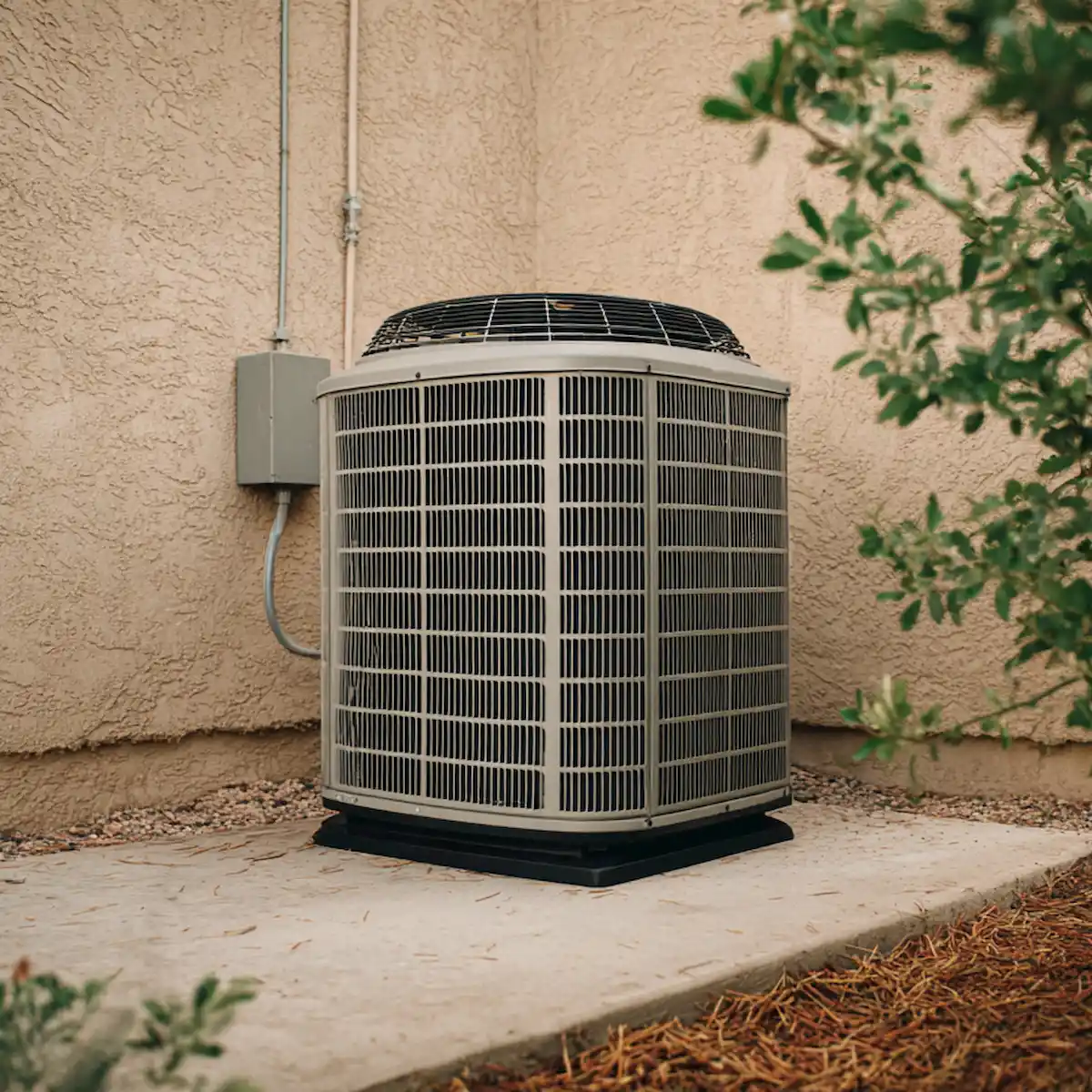
The outdoor condenser unit — the large box sitting outside your home — has one job: reject the heat that was pulled out of your house and release it into the outdoor air. It does this by running refrigerant through the condenser coil and using a fan to push outdoor air across it.
When outdoor temperatures are in the mid-90s, and the air itself is saturated with humidity, the condenser has a much harder time rejecting heat efficiently. Refrigerant pressures rise. The compressor — the heart of the system — works under elevated stress. In a well-maintained system, this is manageable. In a system with low refrigerant, a dirty condenser coil, or a failing capacitor, the added thermal load of a St. Louis summer afternoon is often what pushes a component over the edge.
Compressor failures tend to spike during the first sustained heat wave of the season, when systems that limped through the previous year finally give out. By the time you notice the system isn’t keeping up, the compressor may already be failing, which is why a pre-season inspection catches problems that aren’t yet visible as symptoms.
Keep your condenser coil clean: The condenser coil fins collect cottonwood, grass clippings, and airborne debris throughout the summer. A coil that’s even partially blocked has to work harder to reject heat, which raises operating pressures and accelerates wear. Keeping a two-foot clearance around the unit and having the coil cleaned annually as part of a professional tune-up makes a measurable difference in how hard your system works on hot days.
Indoor Air Quality Adds Another Layer of Demand
St. Louis summers also produce consistently poor outdoor air quality days — ozone alerts, high pollen counts, and airborne particulates that spike when the air stagnates in high-pressure systems. For homeowners, this means keeping windows closed and relying on the HVAC system for ventilation and filtration for longer periods.
A system that’s running continuously also cycles air through your filter more frequently. Filters load up faster in summer than in any other season, and a clogged filter is one of the most common contributors to reduced airflow, coil freezing, and the kind of efficiency loss that shows up as rooms that won’t cool down.
If indoor air quality is a concern in your home — whether because of allergies, asthma, or just the musty smell that can develop during humid summers — the combination of proper filtration and a well-maintained AC system is the foundation. A system that’s struggling to keep up isn’t dehumidifying or filtering effectively, regardless of the filter you’re using.
The Repair Season Nobody Talks About
HVAC technicians in St. Louis know that the busiest two weeks of the year are predictable: they’re whatever week the temperature first climbs above 90°F in June, and then again during the first sustained stretch in late July or August. Systems with marginal components heading into summer fail under the added load of peak heat. Wait times for service calls extend to days rather than hours.
The homeowners who avoid that window are almost always the ones who had their systems serviced in April or May — before demand spiked. A spring AC tune-up isn’t a guarantee against breakdowns, but it significantly reduces the probability of a failure at the worst possible time. A technician during a pre-season visit will check the refrigerant charge, test the capacitor and contactor, clean the coil, inspect the drain line, and measure airflow across the evaporator — all the things that determine whether your system makes it through August or not.
How To Protect Your System This Summer
None of this is meant to be alarming — it’s meant to be useful. St. Louis is a hard market for AC equipment, but properly maintained systems handle it well. Here’s what actually makes a difference:
- Change your air filter every 30–60 days during summer — not quarterly. The system is running far more hours per day than in spring or fall.
- Schedule a pre-season tune-up in April or May, before the first heat wave. This is when technicians have availability and systems aren’t yet under peak load.
- Keep the outdoor condenser unit clear of debris, cottonwood, and vegetation. Don’t let grass or shrubs close in around it.
- Don’t ignore small signs — a system that’s running longer than usual, making a new noise, or leaving one room warmer than others is telling you something. Early diagnosis is almost always cheaper than emergency repair.
- Know your system’s age. If your AC is more than 12–15 years old, have a technician assess it before summer. Understanding your system’s remaining lifespan lets you plan a replacement on your schedule rather than reacting to an emergency.
Frequently Asked Questions
Why does my AC struggle so much on humid days even when it’s not that hot?
Because your AC is removing both heat and moisture simultaneously. On a humid 88°F day, the total amount of energy your system has to move out of your home can be higher than on a dry 95°F day. Dehumidification is an energy-intensive process, and the more moisture in the air, the harder your system works regardless of the temperature reading.
How often should I change my air filter in St. Louis summers?
Every 30 to 60 days during peak cooling season — monthly if you have pets or anyone in the home with allergies. During summer your system may run 8–12 hours a day or more, which loads a filter far faster than the “change every 90 days” guidance on the packaging assumes.
My AC keeps up on normal days but struggles when it’s above 95°F. Is something wrong?
Not necessarily — AC systems are sized to handle typical peak conditions, not extreme outliers. Some struggle on the hottest 10% of days even when everything is working correctly. That said, a system with low refrigerant, a dirty coil, or a marginal capacitor will underperform on those days when a healthy system would still keep up. If the gap is noticeable, it’s worth having a technician take a look.
Is a more efficient AC unit worth the extra cost in St. Louis?
Given the length of St. Louis cooling seasons, yes — more so than in cities where AC runs for two or three months. A higher SEER-rated unit costs more upfront but the savings accumulate faster here because the system runs longer each year. The math varies by home size and usage patterns, but for most St. Louis homeowners replacing an older system, a mid-to-high efficiency unit pays back the premium within a reasonable timeframe.
Ready to get your AC ready for summer?
Thomas Hoffmann Air Conditioning & Heating — St. Louis’ locally owned HVAC company.