
Trane air conditioners and heat pumps use a diagnostic flash code system to communicate faults to technicians and homeowners. When your Trane AC stops cooling, short cycles, or refuses to start, the system's control board is often already telling you exactly what went wrong — if you know how to read it.
This guide covers Trane AC and heat pump fault codes, common symptoms, what causes them, and when to call a professional. If you are in the St. Louis metro and need Trane AC service, call Thomas Hoffmann Air Conditioning & Heating at (314) 471-7625.
How Trane AC Systems Communicate Faults
Trane air conditioners and heat pumps communicate diagnostic information in two ways depending on the system configuration:
- Communicating systems (ComfortLink II / XL824 / XL850 thermostat): The thermostat displays alphanumeric fault codes directly on the screen along with a brief description. These are the clearest — the display will show something like “Fault 79” or a text description like “High Pressure Trip.”
- Non-communicating systems: The outdoor unit's control board flashes an LED in sequences similar to furnace blink codes. The indoor air handler may also have a diagnostic LED. Count the blinks and refer to the code chart on the equipment panel.
Common Trane AC Fault Codes and What They Mean
High Pressure Trip / Fault
What it means: The refrigerant pressure on the high side of the system has exceeded the safe operating limit. The high pressure switch has tripped and shut the compressor down to prevent damage.
Common causes:
- Dirty condenser coil — the most common cause. If the outdoor coil is clogged with dirt, cottonwood seeds, or debris, heat cannot reject from the refrigerant and pressure climbs. This is especially common in St. Louis summers.
- Blocked airflow around the outdoor unit — plants, fencing, or debris too close to the condenser restricts airflow.
- Refrigerant overcharge — too much refrigerant in the system raises high-side pressure.
- Failed condenser fan motor — if the fan is not running, heat cannot dissipate.
- Non-condensable gases (air) in the refrigerant circuit — usually the result of an improper repair.
What to check yourself: Make sure the outdoor unit is clear of debris and that nothing is blocking airflow around it. Check that the condenser fan blade is spinning when the system is running. If the coil surface is visibly clogged, a professional coil cleaning may resolve the issue.
Low Pressure Trip / Fault
What it means: The refrigerant pressure on the low side of the system has dropped below the minimum safe threshold. The low pressure switch has tripped to protect the compressor.
Common causes:
- Low refrigerant charge (refrigerant leak) — the most common cause of low pressure faults. Refrigerant does not get “used up” — if the charge is low, there is a leak somewhere in the system that must be found and repaired before recharging.
- Dirty evaporator coil — a clogged indoor coil restricts refrigerant flow and drops suction pressure.
- Dirty air filter — severely restricted airflow causes the evaporator to over-cool and starve the compressor of refrigerant vapor.
- Closed or blocked return air vents — same effect as a dirty filter.
- Metering device (TXV or orifice) failure — a stuck or failed metering device restricts refrigerant entering the evaporator.
What to check yourself: Check your air filter and replace it if dirty. Make sure all return air vents are open and unobstructed. If the system is running but not cooling and the indoor coil is frosted over, turn the system to fan-only mode to thaw the coil, then call for service.
Compressor Fault / Locked Rotor
What it means: The compressor has failed to start or has drawn excessive current. This may indicate a failing compressor, a failed start capacitor, or a locked rotor condition.
Common causes:
- Failed run or start capacitor — capacitors are one of the most common AC components to fail and are relatively inexpensive to replace. A bad capacitor prevents the compressor or fan motor from starting properly.
- Compressor thermal overload tripped — the compressor's internal thermal protector may have tripped due to excessive heat. This can reset on its own once the compressor cools.
- Low voltage — if the voltage supply to the unit is too low during startup, the compressor may not start.
- Compressor mechanical failure — a seized compressor requires replacement, which is a major repair that often warrants system replacement depending on age.
What to do: A capacitor failure is a quick, affordable repair. A compressor failure is a major one. Have a technician perform a full electrical diagnosis before assuming the worst — many “compressor failures” are actually capacitor failures that get misdiagnosed.
Communication Fault (Communicating Systems)
What it means: On Trane communicating systems (those using ComfortLink II, XL824, or XL850 thermostats), the control components communicate digitally over a 4-wire circuit. A communication fault means one component — the thermostat, air handler, or outdoor unit — has lost contact with the others.
Common causes:
- Loose or damaged communication wire at any connection point
- Power loss to one component of the system
- Failed control board in the air handler or outdoor unit
- Software issue requiring a thermostat reset or firmware update
What to check yourself: Try powering the system off at the breaker for 60 seconds and restarting. If the fault returns, a technician needs to check the low-voltage wiring and control boards.
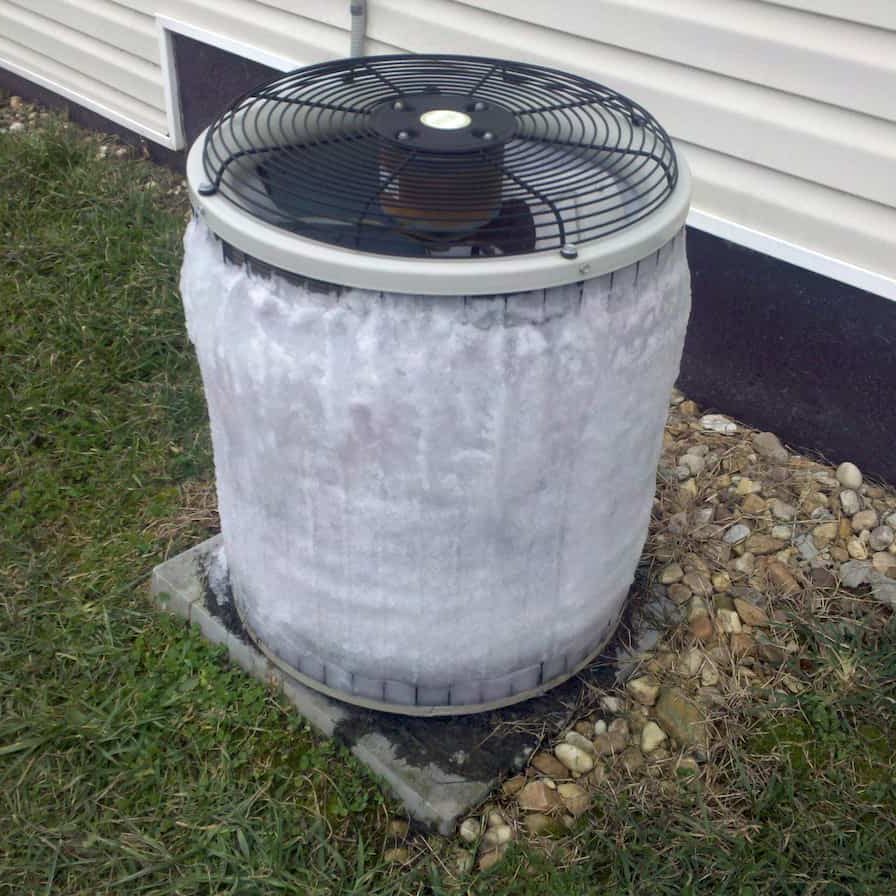
Freeze Protection / Coil Freeze
What it means: The system has detected that the evaporator coil temperature has dropped to the point of icing. The system shuts down the compressor to prevent damage and allow the coil to thaw.
Common causes:
- Dirty air filter — the most common cause
- Low refrigerant charge
- Blocked return air vents or collapsed ductwork
- Running the AC when outdoor temperatures are below 60°F
What to do: Turn the system to fan-only mode and let the coil thaw completely (1–4 hours). Replace the air filter. If the system freezes up again after thawing, you likely have a refrigerant issue and should call for service.
Trane AC Common Symptoms Without Fault Codes
Trane AC Running But Not Cooling
If your Trane AC is running but the house isn't cooling down, the most likely causes are a dirty air filter, low refrigerant, a dirty evaporator coil, or a failed capacitor. Check the filter first. If the outdoor unit's fan is spinning but you feel little airflow from the indoor registers, restricted ductwork or a coil issue may be the cause.
Trane AC Turns On and Off Repeatedly (Short Cycling)
Short cycling — where the AC runs for a few minutes then shuts off before the home reaches the set temperature — is almost always caused by one of four things: an oversized system, a refrigerant issue, a tripping safety switch, or a failing compressor. An oversized system is a design problem; the others are mechanical faults that require service.
Trane Outdoor Unit Not Running
If the indoor air handler is running but the outdoor unit is not, check the disconnect box next to the outdoor unit and the dedicated breaker in the electrical panel. If both have power and the unit still won't run, the most likely culprits are a failed capacitor, a tripped high-pressure switch, or a failed contactor. These are all quick technician repairs.
Trane AC Repair in St. Louis
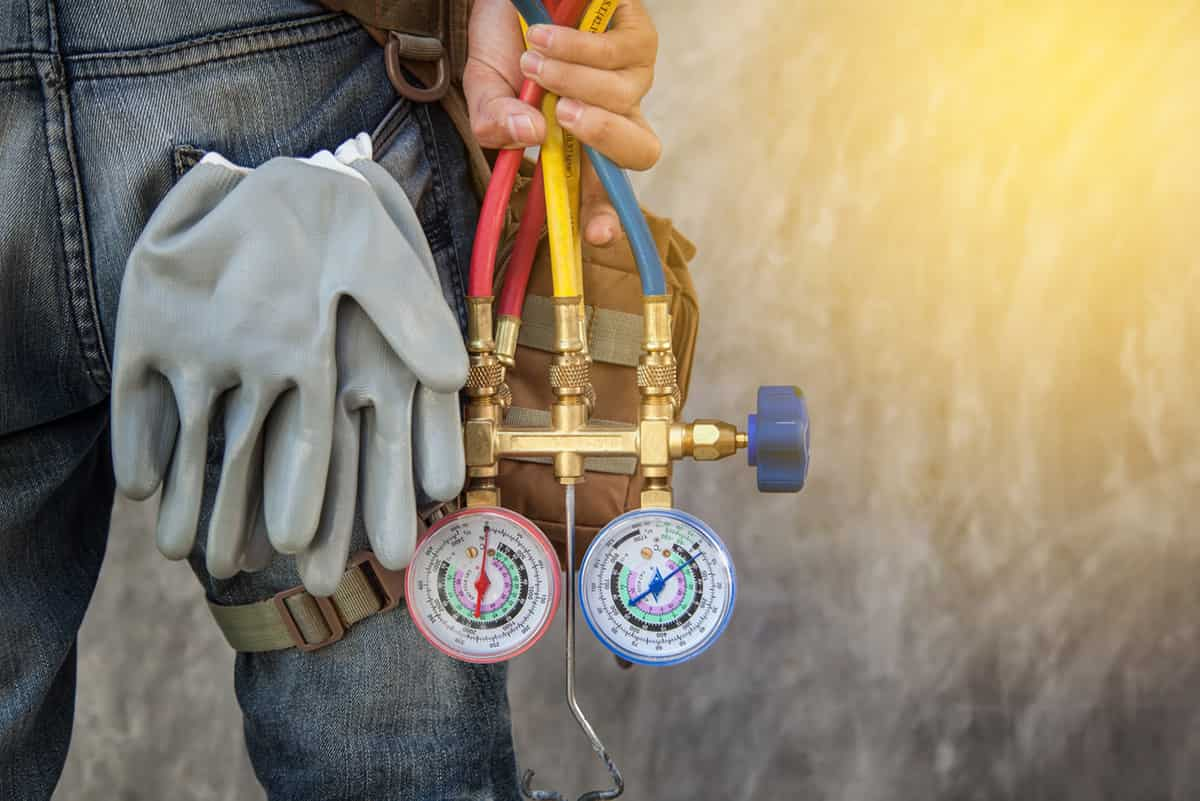
Thomas Hoffmann Air Conditioning & Heating provides professional Trane AC repair throughout the St. Louis metro. Our technicians are experienced with the full range of Trane residential equipment — communicating and non-communicating systems, XR, XV, and XL series units, and Trane heat pumps. We stock common parts and can typically complete repairs on the first visit.
Call (314) 471-7625 to schedule service. We serve Chesterfield, Ballwin, Kirkwood, Webster Groves, Creve Coeur, Des Peres, and the broader St. Louis metro area. For general AC service information, see our AC repair St. Louis page.
24/7 Service Call Now
At Thomas Hoffmann Air Conditioning & Heating, we pride ourselves on being a locally owned and operated HVAC company. With more than 30 years of experience and a master technician and mechanical engineer as our owner, we can replace, repair, and maintain your business or home’s HVAC system.