
Worried about mold in your air ducts? Here are some signs you shouldn’t ignore. Contact Thomas Hoffmann Heating & Air for a professional inspection today.
Mold is one of those household problems that often hides in plain sight, especially when it grows in places you can’t easily see, like inside your HVAC ductwork. Unfortunately, what you don’t see can still impact your health, air quality, and energy bills.
At Thomas Hoffmann Air Conditioning & Heating, we’ve helped countless St. Louis homeowners identify and resolve hidden mold issues inside their air systems. If you’re wondering whether there might be mold lurking in your air ducts, here’s what you need to know.
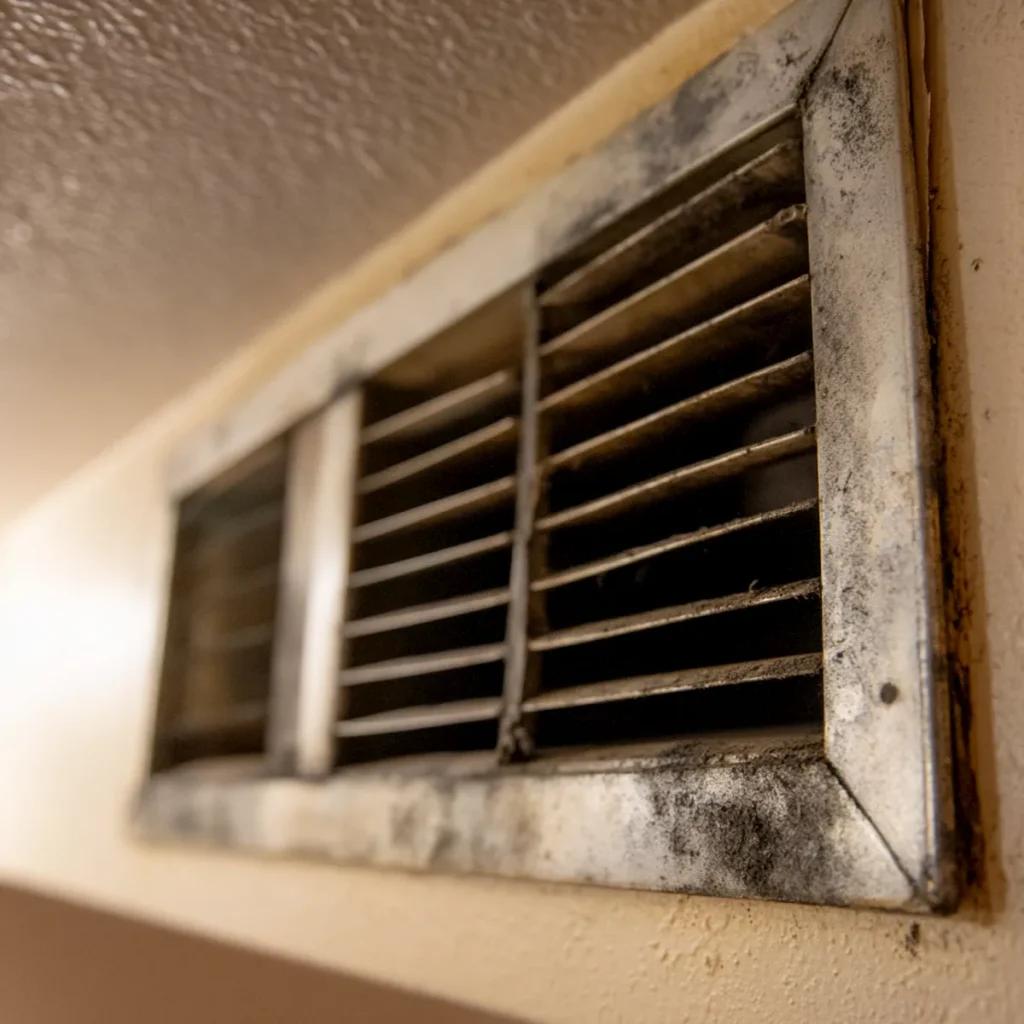
⚠️ Why Mold in Air Ducts Is a Big Deal
Your ductwork is the circulatory system of your home — if there’s mold inside it, spores can be pushed into every room whenever your HVAC system runs.
That can lead to:
- Aggravated allergies and respiratory issues
- Musty odors throughout your home
- Decreased air quality
- Long-term health risks, especially for children and the elderly
And because mold thrives in damp, dark environments, your ducts are the perfect hiding spot.
🔍 Signs You May Have Mold in Your Ductwork
While you might not see the mold directly, your HVAC system may be sending clear warning signs:
1. Musty or Earthy Odors When the AC or Heat Runs
If your home smells like an old basement every time the air turns on, mold or mildew in the ducts may be the culprit. This smell often worsens during humid summers in St. Louis. 🌧️
2. Allergy or Asthma Flare-Ups Indoors
Have you or your family noticed itchy eyes, sneezing, or shortness of breath indoors, especially when the HVAC is on? Mold spores circulating through your air supply can be a hidden trigger.
3. Visible Mold Around Vents or Registers
Sometimes, mold can start to appear around supply vents or on the ceiling nearby. This could be a sign it’s also growing inside the duct system.
4. Inconsistent Airflow or Unusual Humidity
Duct obstructions and moisture buildup from mold can interfere with airflow. If certain rooms feel more humid or aren’t cooling properly, mold might be part of the issue.
5. Recent Water Damage or Flooding
If your home recently experienced a leak, plumbing issue, or flooding — especially in the attic or basement — your ducts may have been exposed to moisture, creating the ideal breeding ground for mold.
🧪 How to Confirm Mold Growth
Because mold is often hidden deep within your ductwork, the only way to know for sure is to have a licensed HVAC technician or indoor air quality specialist perform a thorough inspection.
At Thomas Hoffmann Heating & Air, we use advanced tools and techniques to:
- Inspect deep within your ductwork
- Test air quality for contaminants
- Identify moisture sources
- Recommend cleaning or remediation solutions tailored to your system
🧼 Can Mold in Ducts Be Removed?
Yes — but it requires the right equipment and expertise.
Duct cleaning alone is not always enough. If mold is actively growing, it may require professional treatment, and the source of the moisture must be addressed to prevent its return.
We often recommend:
- Sealing duct leaks
- Installing a whole-home dehumidifier
- Upgrading air filtration or UV purification systems
🛡️ How to Prevent Mold in Your HVAC System
After remediation, prevention is key. Here’s how you can reduce the risk of mold coming back:
- Replace HVAC filters regularly
- Schedule seasonal maintenance and duct inspections
- Install a dehumidifier (especially in basements or crawlspaces)
- Ensure proper drainage from your AC unit
- Keep air vents open and unobstructed
🏡 Why St. Louis Homes Are Especially Vulnerable
The humid Midwest climate, combined with older home construction and basements, makes many homes in St. Louis naturally prone to moisture issues.
That’s why our team at Thomas Hoffmann specializes in whole-home air quality solutions designed specifically for our region, not just generic fixes.
📞 Concerned About Mold in Your Air Ducts? Call the Local Experts.
Don’t ignore the signs. Mold in your ducts can worsen over time, impacting both your comfort and health. Let our experienced team provide the answers and solutions you need, with the honest, local service you expect.
👉 Call Thomas Hoffmann Air Conditioning & Heating at (314) 471-7625 or schedule your indoor air quality inspection online today.
We proudly serve homeowners in Chesterfield, Kirkwood, Ballwin, Webster Groves, and throughout the St. Louis metro area.