
Catching warning signs early gives you time to schedule furnace repair on your terms, not during a cold night.
In St. Louis, the first real cold snap often shows up with little warning. One week you’re running the AC, and the next you’re turning the thermostat up for the first time in months. That first startup is when many furnace problems show themselves, and it’s also when local HVAC schedules fill up fast.
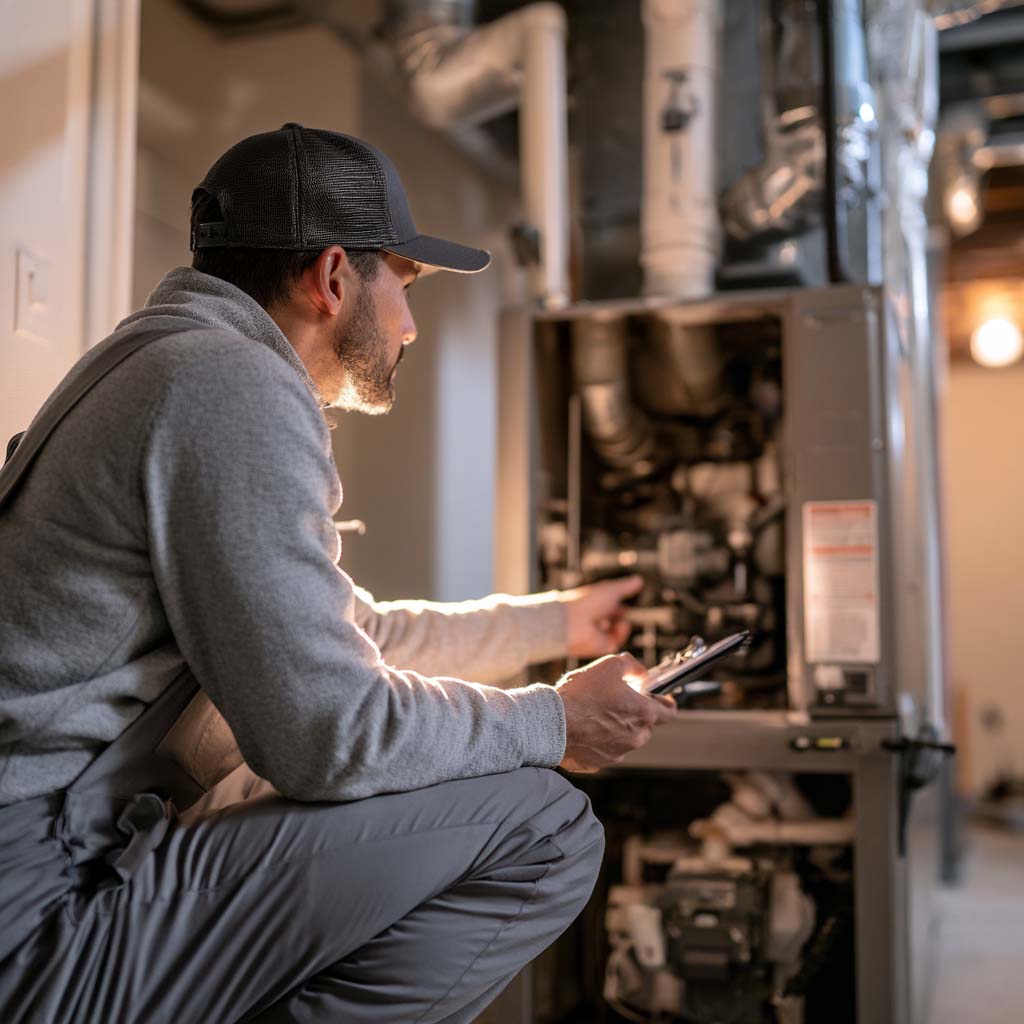
Noticing any of the signs below?
Call Thomas Hoffmann Air Conditioning & Heating at (314) 471-7625 or schedule service online. We’re a locally owned St. Louis HVAC company, not a national chain.
1. Strange Noises When the Furnace Runs
A furnace makes some normal sounds, like a soft click at startup and the steady hum of the blower. Sounds that are new or loud are worth a closer look:
- Banging or booming at startup may point to delayed ignition, where gas builds up before it lights.
- Squealing or screeching can mean a worn blower belt or a motor bearing problem.
- Grinding or scraping may indicate a failing blower motor.
- Rattling could mean a loose panel or a more serious issue inside the unit.
If a noise is new this season, have it checked before you rely on the furnace every day.
2. The Furnace Turns On and Off Too Often
Short cycling means the furnace starts, runs briefly, shuts off, and repeats. A clogged filter, a dirty flame sensor, an overheating heat exchanger, a thermostat problem, or a system that isn’t sized correctly for the home can cause it. Short cycling adds wear to parts and can drive up energy use, so it’s a good reason to call.
3. Some Rooms Stay Cold
If one room is always chilly while another feels warm, the cause could be blocked vents, ductwork issues, a weak blower, or a struggling furnace. Uneven heat often gets more noticeable once outdoor temperatures drop.
4. Your Gas Bills Are Climbing
A gradual rise in heating costs, without a matching change in rates or how you use your home, can mean the furnace is working harder to produce the same heat. Dirty components, worn parts, and aging equipment are common causes.
5. The Burner Flame Is Yellow Instead of Blue
On many gas furnaces, you can see the burner flame through a small viewing window. A healthy flame is usually steady and blue. A yellow, orange, or flickering flame may mean incomplete combustion, which can be linked to carbon monoxide. This one should be checked promptly.
6. A Burning Smell That Doesn’t Go Away
A dusty, burning smell during the first run of the season is common, since dust burns off the heat exchanger. It should fade within an hour or so. If the smell lingers, smells electrical, or comes back each time the furnace runs, turn the system off and call for service.
If you smell gas (a rotten egg odor), don’t touch light switches or the thermostat. Leave the home right away and call 911 or your gas utility from outside.
7. Thermostat Problems
If the furnace doesn’t respond to the thermostat, won’t hold the set temperature, or runs nonstop, the issue may be the thermostat itself, its wiring, or the furnace controls. A quick check of the batteries and settings can rule out the simple causes.
8. Weak Airflow From the Vents
Low airflow can come from a clogged filter, a failing blower motor, or duct problems. If the furnace is running but you can barely feel air at the registers, the system may not be heating your home effectively.
9. Frequent Repairs or an Older System
Many furnaces last roughly 15 to 20 years, depending on maintenance and use. If yours is in that range and needed repairs last winter, it may be time to compare the cost of another repair with the cost of furnace replacement. We’ll walk you through both options so you can choose what fits your home and budget.
Carbon Monoxide: The Sign You Can’t See
Carbon monoxide is colorless and odorless, so you can’t rely on your senses to detect it. A cracked heat exchanger or venting problem can allow it into the home. Make sure you have working CO detectors near sleeping areas and on each level of the home, and test them before heating season.
Symptoms of CO exposure can include headaches, dizziness, nausea, and fatigue, often improving when you leave the house. If a CO alarm sounds or anyone has these symptoms, get everyone outside and call 911.
Why Schedule Before the First Cold Snap
When temperatures drop suddenly, many St. Louis homeowners turn on their heat at the same time, and furnace problems surface all at once. Scheduling a furnace tune-up or furnace repair in early fall can help you:
- Find small problems before they turn into bigger repairs
- Avoid waiting for service during the busiest stretch of the season
- Confirm the system is running safely before daily use
- Keep the furnace running efficiently through the winter
Locally Owned St. Louis Furnace Repair
Many HVAC companies that look local online are part of national chains. Thomas Hoffmann Air Conditioning & Heating is locally owned and based in Des Peres. Tom Hoffmann, a Master HVAC Engineer with 30+ years of experience, leads the company, and we serve homeowners across the St. Louis area, including Kirkwood, Webster Groves, Ballwin, and Chesterfield.